1991 — today
Thirty-five years of one idea
A fixed link across the sound had been debated since the 19th century. It was built in five years — by a consortium of two states, each liable for half.
The state treaty
Denmark and Sweden agree on the fixed link. It is carried by the Øresundsbro Konsortiet, owned half by each state — financed through toll income, not through taxes.
Construction begins
The spoil from the tunnel trench becomes Peberholm — a four-kilometre artificial island deliberately left to nature. Today it is a biotope only researchers may enter.
Closing the gap
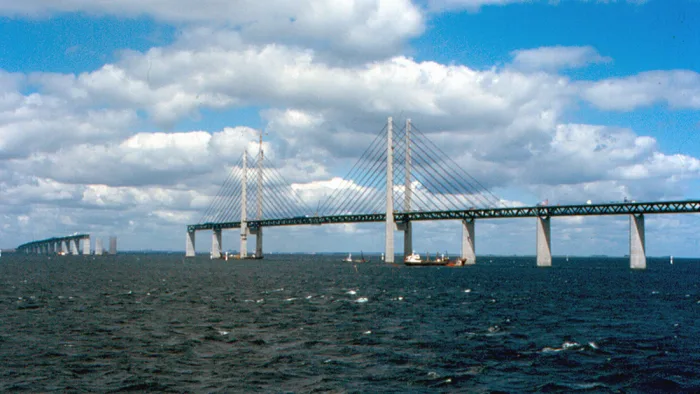
In August 1999 the final bridge segment is lifted into place; Denmark and Sweden are fixed together for the first time. The main span measures 490 metres, the pylons rise 203.5 metres.
Opening on 1 July
Road and rail enter service together: the E20 above, two tracks below. To this day the link remains the only fixed road and rail connection between Sweden and continental Europe.
The slump
Closed borders push traffic down to 4.5 million vehicles — the lowest figure in two decades. Not until 2023 does the link return to pre-crisis levels.
A record year for its 25th birthday
8,003,000 crossings, 21,925 vehicles a day, 605,900 lorry passages over nine metres. The result before value adjustment: 1,736 million DKK. The link is meant to be paid off before 2050.